How To Clean Your Cannabis Grow Room or Grow Tent
How To Clean Your Cannabis Grow Room or Grow Tent
Keeping your grow area clean is part of the foundation for a successful cannabis harvest. When grow tents and garden spaces have a clean environment, growers are less likely to encounter problems with plant-damaging pests, harmful pathogens, and molds. That’s why Integrated Pest Management (IPM) starts with “cultural practices” that include keeping your grow tent clean, but it’s often easier said than done.
We’ve all looked at stains on the floor and leaf material gathered in the back corner and thought, “I should do something about that.” But what is the best way to clean that grow tent, and how often should you do it?
In this article, we will dive into the methods, materials, and degrees of cleaning that growers can use to ensure success. There are many opportunities to keep a growing space clean as the grow progresses; wiping up spilled water and removing fallen leaves are a few. However, a grow tent can be more challenging to clean than a grow room. As most growers know, it’s hard to completely clean a grow tent while the grow is in progress; instead, you need to focus on post-harvest cleaning. That’s why this article outlines the steps and procedures to clean your grow tent after harvest.
Why a Clean Grow Environment Is So Important for Cannabis Growers
Dirty grow environments can reduce your yields. Yes, it’s true: cannabis plants grown in poor environments are less likely to have exceptional yields. This is because plants, like humans, have natural defense systems. Fighting off a pest or pathogen leaves fewer resources to support healthy and vigorous growth.
When you regularly clean a grow tent after every harvest, it should never get to this level of concern. However, in the unlucky case that you’ve had a pest infestation or an outbreak of powdery mildew (PM), there are extra measures to take when cleaning. We’ll cover those, but first, let’s distinguish between cleaning, disinfecting, and sterilizing.
Cleaning: This refers to using a broom daily to sweep up dirt and plant material or wiping up spilled water. After harvest, this includes wiping the walls and equipment with a cloth. While this practice is visually appealing and beneficial, it doesn’t disinfect.
Disinfecting: This involves using naturally derived or synthetic cleaning agents. These products can kill dormant insect eggs, certain pathogens, and mold spores but are not as complete as sterilization.
Sterilization: This process destroys any microorganisms in a grow space and often requires special safety precautions. Pathogens are often microscopic and can cling to micropores in the material used for grow tent walls. We can scrub the walls; they may look clean, but unless you sterilize, there is a potential for some microorganisms to remain.
How often should you clean your grow room?
Often! Your grow room should be:
- cleaned on a daily basis,
- disinfected after each harvest,
- sterilized after an infestation or plant-damaging pathogen is discovered.
Which products should you use to clean, disinfect, or sterilize your grow space?
Various cleaning products can keep your grow space clean, tidy, and pathogen-free. Many can be found at your local grocery or drug store. Common choices include bleach, vinegar, rubbing alcohol, and hydrogen peroxide. Other handy products include alcohol wipes and compressed air.
Although cleaning a grow tent sounds mundane, there can be some real hazards. Here are our top five precautions to take before starting the grow tent cleaning process.
IMPORTANT SAFETY INFORMATION
- Turn off the fans in your tent that circulate the air. Attempting to spray a tent wall with the cleaning solution only to have it blown back into your face by the fan can ruin your day and possibly your eyesight. (Wearing safety glasses offers extra protection against this)
- Be in a well-ventilated area. Grow tents are small enclosed areas that can quickly accumulate potentially hazardous levels of fumes. Keep your exhaust fan running, and be sure it moves the fumes out of the area quickly.
- Unplug electrical equipment before cleaning. Do not spray liquids on hot lights, bulbs, or LED surfaces.
- If growing in living soil beds (too heavy to move in most cases), cover the soil surface with an impermeable material. A healthy living soil is teaming with microorganisms, and the agents used to clean the grow tent can harm their populations.
- Never mix cleaning products haphazardly; unintended and hazardous conditions may arise. Use protective equipment before handling corrosive products.
Do not mix:
Mixture:Result:Bleach + VinegarChlorine gasBleach + Rubbing AlcoholChloroformBleach + AmmoniaChloramineHydrogen Peroxide + VinegarPeracetic acid
Out of all these products, bleach is the strongest, which is why growers use it more often, but it is important to be aware of potential reactions with other cleaning agents. All of these solutions are used in a diluted form. However, the fumes (covered in the safety section above) may still be overwhelming for some growers, so make sure your space is well-ventilated when you are cleaning. Determine your preferred cleaner and dilution ratio through experimentation.
How To Correctly Dilute Bleach For Disinfecting Cannabis Grow Tents
Follow the dilution recommendations on the product label, but in their absence, here are suggested dilution ratios for each of the disinfecting agents:
ProductDilution instructionsBleach4 teaspoons per quart / 5 tablespoons per gallon of room temperature waterVinegarCleaning vinegar or white vinegar at a 1:1 ratioRubbing alcohol70% solution is ideal. If purchasing 99% isopropyl, dilute it with water at a 2:1 ratioHydrogen peroxide3% is recommended. It’s commonly sold at that ratio
Honorable mention: baking soda can also be a cleaner. Baking soda alone isn’t as effective in disinfecting or sterilizing surfaces, but it can help against mold. Unlike the liquids, it is abrasive, which can help loosen tough dirt and stains when scrubbing the tent floor. Baking soda can safely be used with vinegar or hydrogen peroxide to boost its disinfecting potential.
Cleaning Products and Contact Time: How Long Do They Need To Act on Your Grow Tent?
Contact time is an important term to be familiar with. Not all cleaning agents have the ability to kill on contact. Most cleaners must be on surfaces for a specific duration to kill different bacteria, viruses, fungi, and more; this duration is called contact time.
ProductContact timesBleach10 minutes for mold, one minute for bacteria VinegarUp to an hour for molds, 30 minutes for bacteria Rubbing alcoholEvaporates too quickly to kill molds; 10 seconds for bacteria Hydrogen peroxide10 minutes for mold, five minutes for bacteria
How To Clean Your Grow Environment After Harvest
Below are the steps I take after each harvest to clean and disinfect my grow tent to prepare it for the next round of plants. Before starting, I’ll wear latex gloves to protect my skin from toxic or corrosive products. I’ll also use a mask to reduce the direct inhalation of fumes.
- Remove all pots and other objects from the ground. Sterilizing your pots and harvesting equipment between grows is important. This article details how to clean and sterilize your pots.
- Remove your light(s) because we want to clean the tent from the top down, and they will be in the way.
- Turn off all circulating fans in the tent, but leave the exhaust fan on to remove fumes from the cleaners.
- Open the unused exhaust ports on the tent. Pests and leaf material can hide in the folds when cinched up. Opening it will also allow fresh air into the tent as you clean.
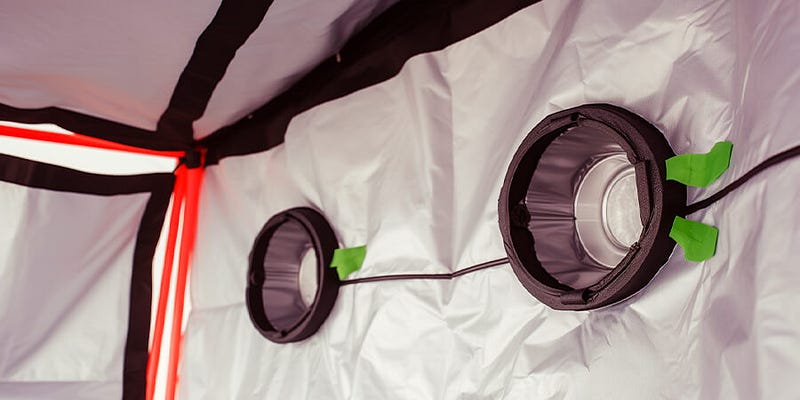
- I use disinfectant wipes to clean the ceiling because they keep me from spraying liquids upwards and reduce the potential for the spray to hit my eyes. I also wipe down all of the electrical cords with these wipes.
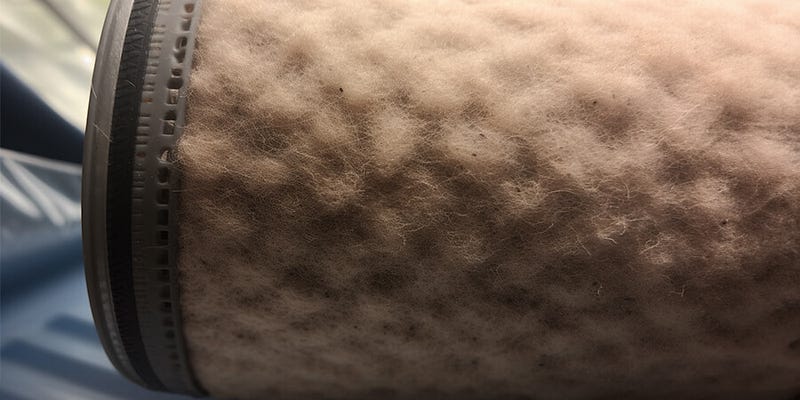
- Wipe down the outside of your exhaust fan and the ducting that leads outside the grow tent. Alcohol wipes, again, are a good way to clean them. It is also a good time to inspect the pre-filter of your carbon scrubber. Replace it if it is dirty. If that isn’t an option, try rinsing it in warm water and letting it fully dry before placing it back on the carbon scrubber.
- Spray the walls with your selected cleaning solutions. If the fumes are strong, only do one wall at a time. Allow the spray to remain on the tent walls for the proper contact time to disinfect (see — contact times). Wipe the walls with a sponge or rag to remove the spray. Spray the walls with water and immediately wipe them down to remove any residue from the cleaner.
- Sweep the floor tray. Disinfect it the same way we treated the walls in step 7.
- Remove the floor tray and repeat step 8. Surprisingly, a good amount of soil, leaf material, and pests can find their way under the floor. If you have a vacuum with a HEPA filter, it can be used to vacuum the space between the tent walls and the frame poles. Avoid using a vacuum that does not have a HEPA filter; you may be blowing bacteria and pathogens right back into the clean tent.
- Inspect your circulating fans for dust build-up on the blades and back grill. Remove the front grill to deep-clean if necessary. A can of compressed air can give it a quick clean (but remove the fan from your tent before blowing it out). At a minimum, wipe the outside of the fans with a disinfecting wipe.
Procedures for cleaning your lights will vary by the type of light and the brand or model. You can clean metal and aluminum surfaces with wipes, but do not run cloth-like material over your LED lights; it may snag on a diode and rip it from the board. Most LED lights also have a waterproofing film around the diodes that certain chemicals can corrode. These important details are why we have an article specifically on cleaning grow lights.
- Hang the light back up and start dreaming about the next run.
How to sanitize your grow room/tent after mites
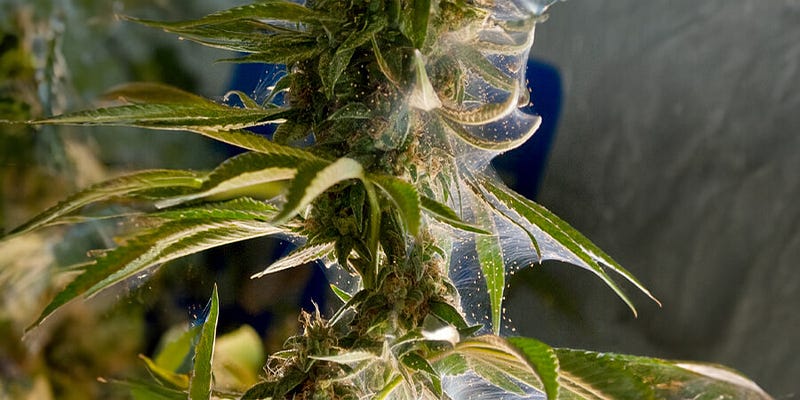
It’s a bummer, but these things happen. When pest infestations take place, it’s important to do a thorough sanitizing. Pests can lower yields and quality, wasting your efforts and money. By removing the plants and soil from the area, pests will not have a readily available food source and will die in time. Unfortunately, some of their eggs may remain.
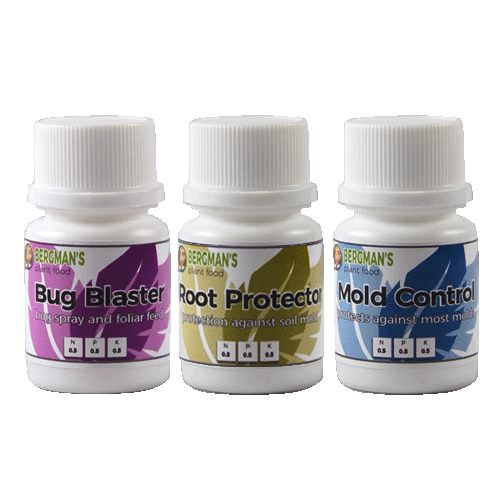
One of the things that you can use to make sure that there will be no pests on your plants at all, is Bergman’s Plant Protector, which you can purchase at our store below.


Comments
Post a Comment